EVENT SUMMARY
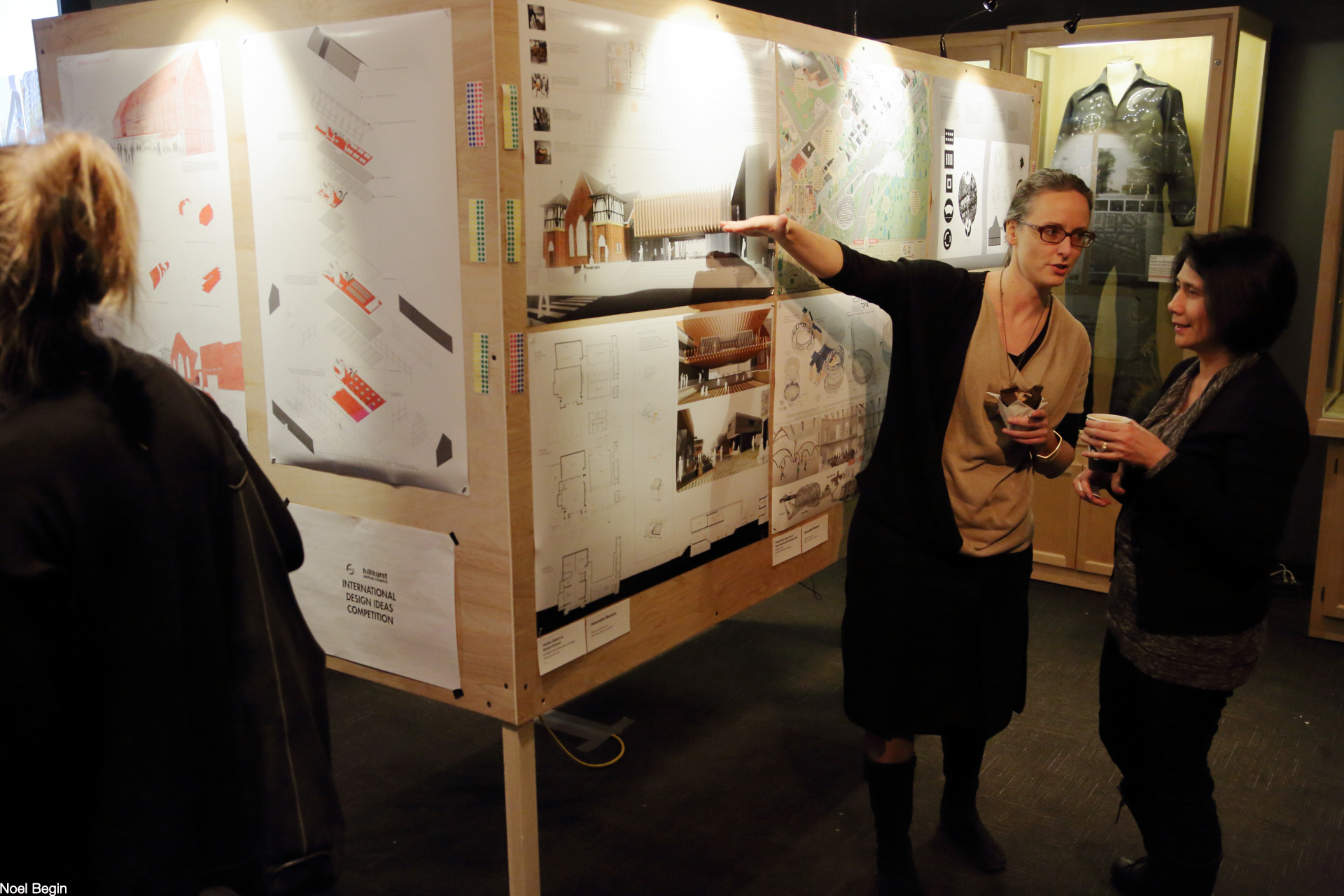
The inaugural Lost Spaces Ideas Competition saw 290 submissions from 40 countries imagine the potential for Calgary’s lost spaces. Creating an inspiring, healthy and green city is often grown out of small actions and a multidisciplinary collaborative approach. Ideas were evaluated on their ability to address complex issues such as storm water management, food production, undesirable or “dangerous” areas, creation of greater links to wildlife and increased accessibility in urban areas. The most celebrated entries offered a clarity of ideas, quality design and an ability to advance thought in the fields of transportation, planning, parks, water services and public art. Highlighted entries addressed social, economic and environmental implications with leadership and vision.
Our jurors had unique insights in defining lost spaces and introduced the competition with their imaginative work and ideas.
Diana Sherlock, an independent curator and visual arts writer, offered that lost spaces allow us to think of possibilities in our city. She considers the relationship between site, context and objects in space and how they change the way we live our lives in the everyday. Sherlock views lost spaces as a bi-product of modernity, the legacy of over-production and consumption. Rich in histories that are colonial, gendered, and raced lost spaces are productive points of interrogation. Considering these in-between places allows opportunity to live more sustainable lives, opens up a space for quieter aspects of our society to speak more loudly, and might allow us to address topics of social isolation, poverty, consumption, economic inequality, social homogenization and the ugliness of the urban environment. These challenges can be engaged with a sense of humor in elegant and creative ways, generating agnostic debate and productive dialogue, encouraging a vibrant democracy that is essential to lively and vibrant cities.
Shawna Thompson is a curator at the Esker Foundation committed to artistic collaboration, co-conspiring, and advocacy. She considered the dialogue between the institution and the greater city or place and what it means to work outside the walls of a gallery. During her time at the Banff Centre, she saw the transformative effect of clandestine interventions in quiet, hidden and marginalized spaces on campus that spoke to the implicit narratives of a place. Janet Cardiff’s piece “Forest Walk” in 1991, introduced visitors to a isolated parcel of land on campus. Mike Macdonald created a butterfly garden with native plants in a hidden area at the Banff Centre. Artist Mark Clintberg “borrowed” wayfinding signs on campus and left notes for meeting places in a piece called “Meet me in the Woods”.
The Esker Foundation has recently purchased the Farmer Jones' used car lot in Inglewood and the site has escaped its fate as a development. It will now be turned into a public green space and sculpture garden.
Shane Coen, a landscape architect with Coen + Partners. He views landscapes as influenced by people, place, innovation and beauty. Spaces are lost between engineering and infrastructural feats, or simply between basic infrastructure like parking lots or roadways. Coen + Partners has undertaken urban and rural landscape projects with a sensitivity to the landscape and the people who live there.
A public housing project in Syracuse, New York was challenged by high crime and high drop-out rates. The project ethos was to encourage wellness, meditation, movement and community collaboration. A parking lot underutilized after 4pm was programmed on the hour with basketball, soccer, and open gym programming. A vacant landscape was enriched by an urban forest and patches of open prairie dotted with resting places. A dark sidewalk was made convivial by the installation of street lights that projected optimistic words on the sidewalk. The Jackson Meadow project revived beautiful farmland and restored the land to virgin prairie, as well as fostered a sensitive development pattern consistent with the tradition of Finnish architecture in the old town.
Pierre Thibault is a Montreal-based landscape architect and artist. His projects are both ephemeral and experimental and offer a unique attention to detail and a sensitivity to the natural world. The Peel Basin in Montreal, which was Montreal’s most industrial area in the 19th Century was modified by the reintroduction of native plants and landscape, and is now one of the more natural and green areas in the city. Thibault and his atelier modify areas in the city with small interventions and pay attention to details as small as cracks in the asphalt that create miniature gardens (jardins des fissures).
The campus of the University Hospital in Sherbrooke Quebec was as warm and charming as a suburban mall. Thibault and his team modified this hospital nested within a large parking lot by creating a green belt and a rooftop garden that offered sick patients a sanctuary of green space.
Susan Szenasy is editor in chief of Metropolis Magazine. She is also a writer, filmmaker, lecturer and teacher and advocate for sustainable, ethical and human-centered design. She articulated lost spaces as being the mistakes of 20th century planning and a top down approach to the design of the built environment. She advocates for co-creation in design, where the needs of communities are reported and understood. Italian hill towns are an example of a visionary approach where everything fits and everything is worked out. If we were able to fill in the lost spaces in our midst’s currently, perhaps our urban North American plans would reflect this reality.
Szenasy’s profession enables her to watch what happens day to day in the designed environment. She highlighted that hospitals, for example, are really sick buildings where the patient’s welfare is secondary. She questioned the connection between buildings and nature; how to get fresh air into buildings, how to free earth from the concrete so water can seep into aquifers so that we don’t lose water from rainfall, how to design buildings so that we can look at beautiful things? Lost spaces are really about a thoughtful consideration of the future; “your welfare, your health and your children’s health, you are developing a new world.”